Clear skies
Construct Ireland investigates what measures the Irish government is undertaking to actively encourage the homeowner to switch to non-polluting renewable energy sources.

Welcome to the archive of Construct Ireland, the award-winning Irish green building magazine which spawned Passive House Plus.
The feature articles in these archives span from 2003 to 2011, including case studies on hundreds of Irish sustainable buildings and dozens of investigative pieces on everything from green design and building methods, to the economic arguments for low energy construction.
While these articles appeared in an Irish publication, the vast majority of the content is relevant to our new audience in the UK and further afield. That said, readers from some regions should take care when reading some of the design advice - lots of south facing glazing in New Zealand may not be the wisest choice, for instance.
Dip in, and enjoy!
Construct Ireland investigates what measures the Irish government is undertaking to actively encourage the homeowner to switch to non-polluting renewable energy sources.
With the threats posed by anthropogenic climate change now accepted as a key international issue, efforts to curb carbon dioxide emissions are becoming manifest around the world in spite of – and even as a response to – the global recession. But any such efforts may be in vain if the focus on carbon dioxide distracts from the need to curtail methane emissions, as Richard Douthwaite explains

At the start of July a key event in the Irish construction industry passed almost entirely unnoticed, with the requirement that the brand new Dwelling Energy Assessment Procedure (DEAP) calculation software be used for all planning applications for new homes with immediate effect. The new tool will be used to calculate Building Energy Ratings (BER) under the requirements of the Energy Performance of Buildings Directive (EPBD). Patrick Daly, lecturer in Environmental Design in the School of Architecture at DIT Bolton St. reveals his view on DEAP and its impact on the industry.
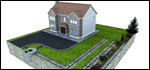
Construct Ireland’s John Hearne discovers the growing shift towards making sites independent in terms of both water supply and wastewater treatment.
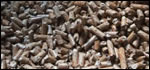
Many of the opportunities that trees offer for sustainable building are harnessed by a housing development in Ballymahon, Co. Longford which combines timber frame construction with recycled newspaper insulation and wood pellet heating. Adding in solar panels and attention to detail for airtightness, these low energy, low carbon homes reveal a developer who sees a bright future in going green. John Hearne visited the site to find out more.
In a comparatively short time, district heating and cooling have emerged as an ideal sustainable solution for mixed use, residential, commercial and industrial developments. Far from being a new technology, district heating systems have been commonplace across Europe since the 1960s. Noel Walshe BE of district heating specialists Noel Walshe ltd explains what is required to deliver the most effective solution.
Sustainable architect Simon McGuinness describes a project in Dublin which is set to surpass the onerous standard using structural insulated panels.
Imaginosity, the new children's museum building in Sandyford's Beacon South Quarter development, is getting the Austrian eco-house treatment, combining low energy, modular construction with a plethora of low carbon energy technologies. Jason Walsh visited the site to take a look.
Ill-considered attempts to upgrade a building’s thermal performance can not only fail to save energy, but can also create serious problems for occupant health and building structure alike. Leading green designer Joseph Little of Joseph Little Architects investigates the particular problems associated with dry-lining single-leaf concrete block walls
Part of the Mater Hospital redevelopment, the recently completed Mater Orchard building is a first class example of how to integrate sustainable building strategies into a substantial building whilst keeping extra cost to a minimum.