Generation 'S'
Kirk Shanks, Senior Researcher at the Sustainability Research Development Group, the Focas Institute, DIT describes the development of this new sustainable generation.

Welcome to the archive of Construct Ireland, the award-winning Irish green building magazine which spawned Passive House Plus.
The feature articles in these archives span from 2003 to 2011, including case studies on hundreds of Irish sustainable buildings and dozens of investigative pieces on everything from green design and building methods, to the economic arguments for low energy construction.
While these articles appeared in an Irish publication, the vast majority of the content is relevant to our new audience in the UK and further afield. That said, readers from some regions should take care when reading some of the design advice - lots of south facing glazing in New Zealand may not be the wisest choice, for instance.
Dip in, and enjoy!
Kirk Shanks, Senior Researcher at the Sustainability Research Development Group, the Focas Institute, DIT describes the development of this new sustainable generation.
Sustainable Energy Ireland was initially criticised by some quarters for the lack of vetting of renewable energy installers registered under the Greener Homes Scheme. However, the recent introduction of mandatory training for those on the register has also proven controversial, writes Lenny Antonelli.

At the start of July a key event in the Irish construction industry passed almost entirely unnoticed, with the requirement that the brand new Dwelling Energy Assessment Procedure (DEAP) calculation software be used for all planning applications for new homes with immediate effect. The new tool will be used to calculate Building Energy Ratings (BER) under the requirements of the Energy Performance of Buildings Directive (EPBD). Patrick Daly, lecturer in Environmental Design in the School of Architecture at DIT Bolton St. reveals his view on DEAP and its impact on the industry.
As we all know, Ireland is currently paying the price for the inability of its political and corporate leaders to take seriously the warning signs of an economy where property investment and borrowing generally got out of control. Looking at policy and commercial investment plans for energy supply and distribution, Richard Douthwaite asks, are the decision makers showing an alarmingly similar attitude to evident gas supply threats?
A sustainable building must address more than energy, carbon or materials, argues Irish born architect Stephen Roe of up-and-coming London architects Roewu – it must respond to its environment. Not only does Roe’s design for the All Weather House achieve that, it boasts green materials, renewable heating and generous insulation too.
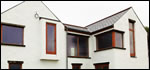
A new house in west Cork offers a green vision for the future of Irish home building: not only is it A-rated, airtight and highly energy efficient, it’s built with ecological materials that are manufactured in Ireland too.

The German-Irish Chamber of Industry and Commerce (GICIC) has just completed a study titled “The Potential of Renewable Energy in Ireland”.
Based on the study’s findings, Bernd Reinhard, Deputy Executive Director of the GICIC outlines the potential that fast emerging renewable technologies possess to revolutionise Ireland’s energy supply, from wind power’s capacity on a national level, to the benefits the likes of solar and geothermal can offer proactive homeowners

Aine Mc Elhinney discovers that the threat radon poses to private water supply needs addressing to help prevent lung cancer deaths

Developers across Ireland are beginning to see the sense in shifting from individual heating systems to centralised energy production feeding into district heating networks. John Hearne visited a mixed-use scheme in Ballisodare, County Sligo, where a cutting edge biomass energy centre is providing a multitude of different buildings with energy from a green, secure source.