The Sun in Action
The Sun in Action by Paul Dykes, Marketing Manager of Sustainable Energy Ireland.
Welcome to the archive of Construct Ireland, the award-winning Irish green building magazine which spawned Passive House Plus.
The feature articles in these archives span from 2003 to 2011, including case studies on hundreds of Irish sustainable buildings and dozens of investigative pieces on everything from green design and building methods, to the economic arguments for low energy construction.
While these articles appeared in an Irish publication, the vast majority of the content is relevant to our new audience in the UK and further afield. That said, readers from some regions should take care when reading some of the design advice - lots of south facing glazing in New Zealand may not be the wisest choice, for instance.
Dip in, and enjoy!
The Sun in Action by Paul Dykes, Marketing Manager of Sustainable Energy Ireland.
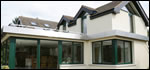
Randy Ralston and Mel Cronin aimed for the passive house standard with their upgrade, and though they didn’t quite get there they ended up with a house that produces more energy than it consumes, making it one of the country’s flagship green renovation projects.
As Ireland struggles to meet its commitments to reducing CO2 emissions in accordance with the Kyoto Protocol, the renewable energy sector continues to flourish as wind farms rapidly develop and solar energy becomes increasingly viable

With an economy fuelled by a government approach to planning that many people equate to a road building and house building free for all, it should come as no surprise that quality of life suffers
It could be a reflex response to the shockingly poor construction standards that came to define Ireland’s boom years, but the world’s leading low energy building standard is starting to thrive in Ireland. As the several case studies following this article reveal, a groundswell of Irish clients, designers, contractors and manufacturers are starting to recognise the opportunities available in becoming early adopters of a standard destined for exponential global growth.
Leading Eco Architects Rachel Bevan and Professor Tom Woolley look at the connection betweeLeading Eco Architects Rachel Bevan and Professor Tom Woolley look at the connection between conservation and sustainabilityn conservation and sustainability.
Ireland ’s reliance on fossil fuel sources for electricity generation places the whole country on unstable ground as these limited resources dwindle
As oil prices surge and the need to rapidly switch to energy sources that are secure and environmentally friendly becomes increasingly apparent, more and more Irish people are tapping into the renewable energy resources at their disposal. But are the Government giving people the incentive to make the switch?
In the hands of the right architect, meeting the passive house standard needn’t involve compromising on design. Construct Ireland visited a recently certified passive house which shows that a seamless low energy architecture is possible