
person_outline
From the Construct Ireland archives
Welcome to the archive of Construct Ireland, the award-winning Irish green building magazine which spawned Passive House Plus.
The feature articles in these archives span from 2003 to 2011, including case studies on hundreds of Irish sustainable buildings and dozens of investigative pieces on everything from green design and building methods, to the economic arguments for low energy construction.
While these articles appeared in an Irish publication, the vast majority of the content is relevant to our new audience in the UK and further afield. That said, readers from some regions should take care when reading some of the design advice - lots of south facing glazing in New Zealand may not be the wisest choice, for instance.
Dip in, and enjoy!
Energise Clonakilty
An ambitious new community initiative aims to run Clonakilty on 100% renewable energy — and with similar projects sprouting up across Ireland and Europe, it offers one local example of how our Energise Ireland campaign can achieve its primary goal: weaning Ireland off fossil fuels and on to green energy.
Eco Schools
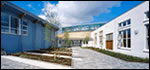
It is hoped that the lessons learned from the construction and monitoring of these buildings will assist in reducing the energy usage of future school designs.
Gridlock

Ireland ’s reliance on fossil fuel sources for electricity generation places the whole country on unstable ground as these limited resources dwindle
Environmental Authority
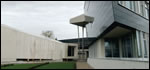
As long term readers of Construct Ireland will recall, the mainstreaming in recent years of sustainable design and construction has been exemplified in many innovative local authority offices. John Hearne visited Aras Contae an Chláir, and discovered a building which attempts to holistically minimise environmental impact, with attention paid to more than just energy performance and carbon emissions.
Healthy cottage upgraded
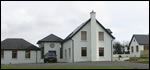
In 2005 Construct Ireland profiled the timber frame extension to Hannah and Martin Naughton’s Meath cottage. Five years later we’re returning to profile the upgrade of the original bungalow — a renovation that demonstrates how to detail dry lining without running the risk of mould growth
Saving Plan

Fingal County Council have clearly shown a laudable commitment to innovation by introducing a mandatory planning requirement for seven areas that all new developments reduce energy use and C02 emissions relating to space & water heating to 60% below Building Regulations requirements, with 30% of space & water heating coming from renewable energy sources
Methane & climate change

With the threats posed by anthropogenic climate change now accepted as a key international issue, efforts to curb carbon dioxide emissions are becoming manifest around the world in spite of – and even as a response to – the global recession. But any such efforts may be in vain if the focus on carbon dioxide distracts from the need to curtail methane emissions, as Richard Douthwaite explains

For peat's sake
Up till now, the activities of semi-state energy companies like Bord na Móna, ESB & Bord Gais have not won the favour of environmentalists. Richard Douthwaite explains how that situation is destined to rapidly change, and exclusively reveals details of the ambitious new green direction being adopted by Bord na Móna.