Opinion

Semi-state business Bord Gáis have placed green innovation at the centre of their business strategy. As CEO John Mullins reveals, pay as you save and renewable energy will shape the company’s future.

Welcome to the archive of Construct Ireland, the award-winning Irish green building magazine which spawned Passive House Plus.
The feature articles in these archives span from 2003 to 2011, including case studies on hundreds of Irish sustainable buildings and dozens of investigative pieces on everything from green design and building methods, to the economic arguments for low energy construction.
While these articles appeared in an Irish publication, the vast majority of the content is relevant to our new audience in the UK and further afield. That said, readers from some regions should take care when reading some of the design advice - lots of south facing glazing in New Zealand may not be the wisest choice, for instance.
Dip in, and enjoy!
Semi-state business Bord Gáis have placed green innovation at the centre of their business strategy. As CEO John Mullins reveals, pay as you save and renewable energy will shape the company’s future.
The winner of the sustainability award at the 2011 Irish Architecture awards, Roebuck Castle student residence at UCD’s Belfield campus is also the biggest certified passive house project built to date in Ireland and the UK. Tony Rigg of Kavanagh Tuite Architects explains how such a significant building achieved passive results.

John Hearne spoke to a number of independent energy experts to develop an impartial view of the main sustainable heating options.
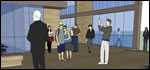
Jason Walsh spoke to David Smith of O'Mahony Pike Architects about the practice's uniquely-designed show apartments for this year's Myhome.ie Spring House and Garden exhibition.

Conventional wisdom dictates that higher construction costs — for instance to reduce energy consumption and carbon emissions — would either squeeze developers’ profit margins or increase house prices. Tom Dunne, Head of DIT’s School of Real Estate and Construction Economics, reveals how misguided this view could be...
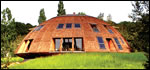
In the first installment of a new feature on international green buildings, Lenny Antonelli takes a look at five innovative, sustainable and striking buildings from around the world.
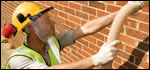 Earlier this summer SEI announced that, from December, external wall insulation systems must have Irish Agrément certification to be eligible for support under the Home Energy Saving scheme. But many in the green building sector are critical of the decision, and some are questioning the value and purpose of Agrément. Lenny Antonelli reports.
Building a visitor centre at such an evocative site as the Cliffs of Moher, one of Ireland’s greatest tourist attractions must have been something of a challenge. By attempting to cater for visitors, the centre could so easily have ruined the rugged, barren landscape which makes people visit in the first place. John Hearne visited the new interpretive centre to discover a building which addresses this problem by becoming part of the landscape, whilst using eco technologies to reduce the building’s strain on the broader environment.
Construct Ireland’s John Hearne discovers the growing shift towards making sites independent in terms of both water supply and wastewater treatment.