
person_outline

Freelance journalist John Hearne has contributed a diverse range of news and feature material to a range of Irish newspapers and magazines. Currently, he is a regular contributor to The Irish Examiner and The Irish Independent, where he writes on tourism, consumer affairs, business and careers.
Monday, 07 January 2008 16:00
A Breath of Fresh Air
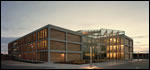
Prestige commercial buildings can place a heavy toll on the environment, typically relying in Ireland on carbon intensive grid electricity to power air conditioning systems throughout the warmer parts of the year and inefficient electric lighting – often all year around. Completed in November 2004, software company SAP’s Galway offices offer a rare opportunity to find out how a natural ventilated and low energy lighting building is working in practice, as John Hearne reveals.
Published in
Design Approaches
Monday, 07 January 2008 15:33
Renewed efforts
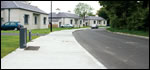
In the future, the high cost and scarcity of fossil energy may force a shift towards retaining and modernising old buildings, thereby avoiding the use of huge amounts of energy to manufacture building materials. John Hearne visited the Belvedere Orphanage, a group of 19th century dwellings whose low energy refurbishment may offer a template for development in the future, by using wood pellet district heating and a host of energy saving measures whilst nonetheless paying great attention to preserving the buildings’ heritage value.
Published in
Sustainable Building Technology
Friday, 04 January 2008 02:20
Home Truths
Patrick Daly, co-founder of the RiSE (Research in Sustainable Environments) research unit in the DIT has undertaken an in depth study and critique of the current Irish Part L for energy efficiency in dwellings, comparing it in detail to the UK equivalent. The findings raise challenging questions about the Irish standards and methodology and highlight serious shortcomings in comparison to our UK neighbours, permitting substantially higher levels of CO2 emissions from new homes in Ireland than in the UK.
Published in
Part L - Building Regulations
Friday, 04 January 2008 01:47
Green Rooms

Hotels typically take a heavy toll on the environment, with large amounts of energy used for heating, hot water, lighting, air conditioning and laundry, and huge amounts of waste being landfilled each year. John Hearne visited the Westport Woods Hotel and discovered a highly successful approach to reducing environmental impact that is also yielding substantial dividends in terms of cost savings and positive publicity
Published in
Design Approaches
Friday, 04 January 2008 01:42
A place in the sun
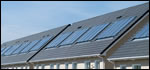
The mainstreaming of sustainable building technologies is manifesting itself in a growing number of developers seeking to find the greener option. Jason Walsh describes a recent project where airtight timber frame construction meets high-tech solar thermal in a North Dublin House of Tomorrow funded scheme which is delivering low carbon results
Published in
Sustainable Building Technology
Friday, 04 January 2008 01:36
Modern Age

Creating the right comfort in buildings for elderly people involves ensuring a warm internal environment, which typically results in high energy consumption. John Hearne visited the new Castle Gardens Retirement Village as it approached completion and found a project that combines complimentary low energy technologies, materials and design to deliver high levels of comfort whilst also keeping running costs, energy consumption and carbon emissions low
Published in
Design Approaches
Tuesday, 21 August 2007 23:48
Economy of scale

Thanks to the ESCo model, one school in Donegal has gone green, seen its heating bills reduced by 15% yet has not had to outlay one cent in capital expenditure. John Hearne investigates an emerging trend that is bringing low carbon energy into another realm.
Published in
District Heating
Tuesday, 21 August 2007 23:02
Sustainability Sells

With oil prices nearing record highs, forward thinking developers who’ve taken the initiative to incorporate green aspects into their projects are showing a buoyancy that starkly contradicts the downturn, as John Hearne reveals.
Published in
Eco Housing
Tuesday, 03 July 2007 16:18
Mixed Signals
As it nears completion, John Hearne visits what is anticipated to be one of the lowest energy buildings in Ireland's recent history.
Published in
Design Approaches
Tuesday, 03 July 2007 16:06
Occupied Territory
John Hearne explains how truly low energy buildings can succeed or fail depending on how they engage with their occupants.
Published in
Renewable Energy
Page 10 of 11
Marketplace + companies featured in this article
Our ethos at Ecological Building Systems is to achieve 'Better Building' by adopting a 'Fabric First' approach to design.