A Class Apart
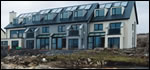
Kevin O’Flaherty’s development overlooking Galway Bay combines impressive energy saving techniques with the sorts of features that buyers of high-spec homes have grown to expect, as John Hearne discovers.

Welcome to the archive of Construct Ireland, the award-winning Irish green building magazine which spawned Passive House Plus.
The feature articles in these archives span from 2003 to 2011, including case studies on hundreds of Irish sustainable buildings and dozens of investigative pieces on everything from green design and building methods, to the economic arguments for low energy construction.
While these articles appeared in an Irish publication, the vast majority of the content is relevant to our new audience in the UK and further afield. That said, readers from some regions should take care when reading some of the design advice - lots of south facing glazing in New Zealand may not be the wisest choice, for instance.
Dip in, and enjoy!
Kevin O’Flaherty’s development overlooking Galway Bay combines impressive energy saving techniques with the sorts of features that buyers of high-spec homes have grown to expect, as John Hearne discovers.

Energy upgrade specialists Eaga are responsible for technical training on SEAI’s Home Energy Saving scheme. Eaga technical manager Paul Wilson answers some key technical questions on the installation of boilers and heating arising from the recent contractor training.

Responding to the Department of Communications, Marine & Natural Resources’ Green Paper “Towards a Sustainable Energy Future for Ireland”, Mark Coyne, Technical Director of Dalkia Ireland, outlines the challenges and responses to the three main pillars of the Green Paper – sustainability, competitiveness and security of supply.
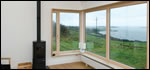
Nowhere demonstrates the need for a high-performance building envelope quite like a coastal site. John Hearne visited a cutting edge timber frame house overlooking Sligo Bay that was designed to achieve a highly insulated, air-tight and low embodied energy envelope whilst making the most of the spectacular vista.

A new public park on the northside of Dublin combines wind power and sustainable water management with environmentally sound materials and strategies to boost biodiversity, making it a standard-bearer in urban design. Lenny Antonelli visited the site

Set in the shadow of Macgillycuddy's Reeks, Killorglin, County Kerry is a dramatic and rugged location best known as a tourist destination and home to Puck Fair. It’s also home, however, to one of Ireland’s most successful companies, FEXCO, which has opened its new low-energy corporate headquarters in the town.
Bank of America Tower, to be located at One Bryant Park in midtown Manhattan is a US$1 billion project that has been designed to be one of the most highly efficient and ecologically friendly tall buildings in the world. The building, currently under construction, is expected to be complete in 2008.
Jason Walsh got in touch with Cook + Fox Architects in New York, designers of the Bank of America Tower to see how the practice plans to square the circle of designing an environmentally sound high-rise building.

The German-Irish Chamber of Industry and Commerce (GICIC) has just completed a study titled “The Potential of Renewable Energy in Ireland”.
Based on the study’s findings, Bernd Reinhard, Deputy Executive Director of the GICIC outlines the potential that fast emerging renewable technologies possess to revolutionise Ireland’s energy supply, from wind power’s capacity on a national level, to the benefits the likes of solar and geothermal can offer proactive homeowners
In light of Ireland’s poor performance in the recent European Environment Agency Report on drinking water quality, the issue of Ireland’s wastewater treatment from one off houses is poised to stay in the spotlight. Construct Ireland’s Pat Kennedy, environmental engineer, investigates.

The Carroll’s cigarette factory in Dundalk has been reborn as an avant garde exemplar of wind energy storage and an ingenious approach to integrated heating, ventilation and cooling, as sustainable design expert Chris Croly of BDP explains.