
person_outline

Tuesday, 23 August 2022 08:36
World’s first passive house hospital completed in Frankfurt
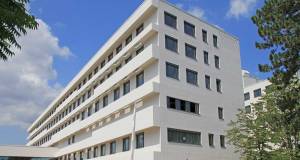
The world’s first passive house hospital has been certified by the Passive House Institute – showing that the standard can be applied to even to the most demanding building types.
Monday, 22 August 2022 08:18
AECB conference to showcase timber innovation
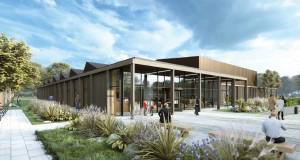
The AECB conference 2022 will focus on practical solutions to decarbonising buildings, with a particular emphasis on timber-based approaches with the potential to deliver low energy, healthy buildings at scale while minimising the use of precious resources and impact on the environment.
Published in
Events
Tagged under
Monday, 22 August 2022 08:08
New digital hub for sustainable building upskilling
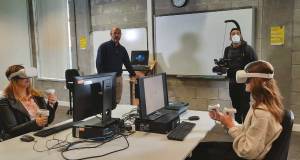
A new online hub aimed at upskilling the construction sector is now live.
Published in
General
Tagged under
Thursday, 11 August 2022 13:22
Partel approved as Engineers Ireland CPD provider
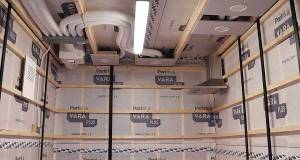
Partel has received recognition, and accreditation as a registered training provider for Engineers Ireland for two CPD (continuing professional development) seminars: ‘Methods and applications to improve air and wind-tightness, thermal bridging’ and ‘Ventilation solutions for energy-efficient buildings.’
Published in
Marketplace
Tagged under
Friday, 27 May 2022 11:03
“Sustainability must be embedded at all stages of a building’s life,” says David Browne of RKD

In the #BuildingLife ambassador spotlight series, Passive House Plus is profiling leaders who have endorsed the Irish Green Building Council’s call to address the environmental impacts of buildings across their lifecycle.
Published in
Blogs
Tagged under
Thursday, 26 May 2022 08:13
45,000 more Irish homes face radon risk, new maps reveal
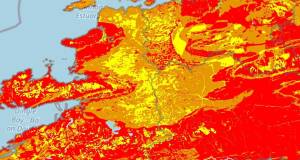
New radon maps, launched by the Environmental Protection Agency today at the National Radon Forum, show an increased risk from radon in Ireland, with 170,000 homes now predicted to be at risk of radon exposure above the national reference level.
Published in
Government
Tagged under
Tuesday, 17 May 2022 09:06
Max Fordham House verified as UK’s first net zero carbon home
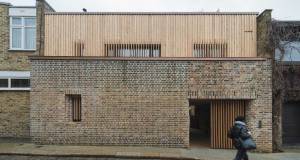
Max Fordham House in North London
has become the first residential
building in the UK to be verified as net zero
carbon. Located in the London Borough
of Camden, this certified passive house
was designed for, and lived in by, the late
legendary engineer Max Fordham.
Tuesday, 17 May 2022 09:01
Renfrewshire aims for 3,500 whole-house deep retrofits
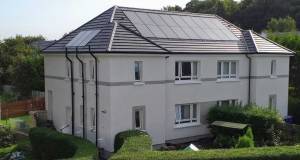
A major new social housing retrofit programme
by Renfrewshire Council will
see up to 3,500 local authority dwellings
renovated to either Enerphit or the AECB
Retrofit Standard.
Tuesday, 17 May 2022 08:57
UK’s first passive leisure centre nears completion
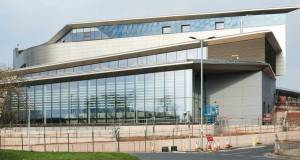
St Sidwell’s Point Leisure Centre in Exeter,
the first passive-certified leisure centre in the UK, is set to open to the public on 29 April
Published in
Projects
Tagged under
Friday, 13 May 2022 14:19
Mitsubishi heat pumps 6-7 times lower CO2 than condensing gas boilers

Leading sustainable heating, ventilation and air conditioning systems manufacturer Mitsubishi Electric has produced analysis showing the whole life carbon calculations of its heat pumps may be six to seven times lower than comparable condensing gas boilers.
Published in
Marketplace
Tagged under
Page 22 of 102