Passive dynamics
For a building to truly be considered a passive house a vast range of criteria need to be met, as Niels Bjergstrom, founder of Zero-Carbon Solutions Ltd reveals.

Welcome to the archive of Construct Ireland, the award-winning Irish green building magazine which spawned Passive House Plus.
The feature articles in these archives span from 2003 to 2011, including case studies on hundreds of Irish sustainable buildings and dozens of investigative pieces on everything from green design and building methods, to the economic arguments for low energy construction.
While these articles appeared in an Irish publication, the vast majority of the content is relevant to our new audience in the UK and further afield. That said, readers from some regions should take care when reading some of the design advice - lots of south facing glazing in New Zealand may not be the wisest choice, for instance.
Dip in, and enjoy!
For a building to truly be considered a passive house a vast range of criteria need to be met, as Niels Bjergstrom, founder of Zero-Carbon Solutions Ltd reveals.
Interhabs, a company who build to the highly energy efficient Canadian Super E programme, have recently entered the Irish house building market.
Jeff Colley speaks to Ronan Long , General Manager of Interhabs Ireland, about the reasons why he believes Interhabs will bring energy efficient, comfortable, healthy homes to people across Ireland
John Hearne explains how truly low energy buildings can succeed or fail depending on how they engage with their occupants.

Richard Douthwaite explains why the bailout may turn out to be a gift to Ireland, and offers some advice for dealing with a default.
The Department of Education has made its commitment to energy efficiency and CO2 reduction clear in developing and bringing into practice targets for primary school design that aim for less than half of the accepted good practice in the field. Project coordinator John Dolan, Senior Engineer with the Department of Education explains how this approach works within normal Departmental budgetary limits to create school buildings that show the way ahead for building designers.

In light of Ireland’s poor performance in the recent European Environment Agency Report on drinking water quality, the issue of Ireland’s wastewater treatment from one off houses is poised to stay in the spotlight. Construct Ireland’s Pat Kennedy, environmental engineer, investigates.
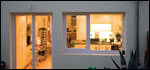
With over twenty years of design behind him, architect Martin Meyer has tackled plenty of big projects in his time, but his first home renovation challenge – to turn a dank 19th century red-brick house into a bright energy efficient home – was still eye-opening. Lenny Antonelli reports.
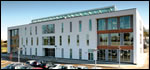
Completed in December 2009, Graham Group’s new headquarters reveal the construction and asset management company’s commitment to green building. The project’s sustainability adviser, Chris Croly of BDP describes an innovative design that pushes the boundaries of natural ventilation and takes a thoughtful approach to materials and buildings services to ensure a minimal environmental impact.
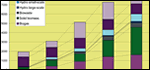
Everyone knows that the cheapest way of doing something can turn out to be very expensive in the end. The decision to make Ireland ’s electricity system so reliant on gas is about to bear this principle out. By Richard Douthwaite.