From the Construct Ireland archives


Welcome to the archive of Construct Ireland, the award-winning Irish green building magazine which spawned Passive House Plus. The feature articles in these archives span from 2003 to 2011, including case studies on hundreds of Irish sustainable buildings and dozens of investigative pieces on everything from green design and building methods, to the economic arguments for low energy construction. While these articles appeared in an Irish publication, the vast majority of the content is relevant to our new audience in the UK and further afield. That said, readers from some regions should take care when reading some of the design advice - lots of south facing glazing in New Zealand may not be the wisest choice, for instance. Dip in, and enjoy!

Hempcrete retreat

Hempcrete
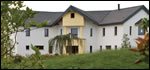
No matter how energy efficient a building method is, constructing a house from scratch will always cause some damage to the environment - but what if a building material could absorb more carbon than it causes to be released over its life cycle? Lenny Antonelli visits a hempcrete house in Co. Down that seeks to trial this innovative method of building

Sustainability in store

IKEA
Little did we know when campaigning for the Fingal energy standard in 2005-06 that Construct Ireland would have a direct impact on Ikea’s first Irish store. Driven by a combination of Fingal’s requirements and their own renewable energy policy, the Swedish retail giant has invested in the largest ground source heat pump installation in Ireland and the UK, along with a well-thought biomass system fed by an onsite waste stream and a host of other green measures, as John Hearne reports

Courting Sustainability

The development of Coppinger Court, a high density apartment complex on Popes Quay, Cork City, has been broadly received with a warm response, picking up awards in 2004 including the RIAI Best Sustainable Building award.

Generation 'S'

0212generationtitle.jpg

Kirk Shanks, Senior Researcher at the Sustainability Research Development Group, the Focas Institute, DIT describes the development of this new sustainable generation.


Out of the ordinary

0309-outoftheordinarytitle.jpg
It has long been anticipated that the cost of sustainable building will come down as it enters the mass market, benefiting from economies of scale and greater industry confidence in low impact techniques and technologies as they become more familiar. Jay Stuart, managing director of integrated sustainable design consultants Delap and Waller EcoCo reveals a Kildare housing project which is likely to rapidly accelerate this process, and convince even the most conservative elements of the industry that low energy, low carbon building can be achieved at little or no additional cost

Measured efforts

How SEI’s pilot energy refurb initiative is shaping up
Earlier this year constructireland.ie broke the news of the introduction of the pilot Home Energy Saving Scheme, a new grant funding programme designed to stimulate the en masse refurbishment of Ireland’s poorly performing existing housing stock. John Hearne travelled to one of the pilot areas to see how the scheme is working on the ground, and discover how the scheme is developing.

Part L changes

Part L changes
On 7 June 2011 environment minister Phil Hogan TD signed the latest changes to Part L of the building regulations into law, which will make it mandatory for all new homes to be 60% more energy efficient than the standards at the peak of the construction boom. Jeff Colley sheds some light on the key changes

Stillorgan upgrade

Stillorgan upgrade
An energy conscious renovation and extension in south Dublin breathes new life into a typical semi detached home — the house is now wrapped with external insulation and boasts breathable and ecological materials too.

One-off house with a green conscience

One-off house
Mixing excellent thermal performance with renewable heating, efforts to boost biodiversity and plans for micro-generation, a new timber frame house in rural Cork shows that both appealing design and low environmental impact can be achieved with one-off rural housing.

Super powers

Super Powers
The development of sustainable building in Ireland has had to wait for the public to become concerned about energy supply, climate change, and the implications of living in draughty, damp buildings.  Much of the established low energy know-how emanates from countries where cold winters drove innovation. Drawing from 50 years of research and development between the Canadian government and housing industry, the Super E programme may be just what Ireland needs, as John Hearne discovered at a new development in Rosslare.