Green power

Newly elected Green Party Ministers John Gormley & Eamon Ryan talk to Construct Ireland about their vision for a sustainable future.
Welcome to the archive of Construct Ireland, the award-winning Irish green building magazine which spawned Passive House Plus.
The feature articles in these archives span from 2003 to 2011, including case studies on hundreds of Irish sustainable buildings and dozens of investigative pieces on everything from green design and building methods, to the economic arguments for low energy construction.
While these articles appeared in an Irish publication, the vast majority of the content is relevant to our new audience in the UK and further afield. That said, readers from some regions should take care when reading some of the design advice - lots of south facing glazing in New Zealand may not be the wisest choice, for instance.
Dip in, and enjoy!

Newly elected Green Party Ministers John Gormley & Eamon Ryan talk to Construct Ireland about their vision for a sustainable future.

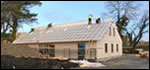
Designing a low-energy public building with passive ventilation and lighting in mind is one thing – making it fit seamlessly into a rural wetland environment is quite another. Lenny Antonelli visited the award-winning Ballybay Wetlands Centre in County Monaghan - a closed-panel timber frame structure designed to sit softly on the surrounding landscape.

Built on stilts, entirely encased in recycled newspaper insulation on all sides, and designed to be easily taken apart so that its constituent elements can be reused once it reaches its end of life, Portlaoise Locomotive Drivers Building could hardly be more green. But it is – it’s a certified passive house. Iarnród Éireann senior architect David Hughes explains how such a sustainable exemplar came to be.

With the age of cheap and abundant fossil fuel energy coming to an end, district heating, where a development is heated from a single, centralised heat source is becoming an increasingly attractive option due to the capital and running cost, efficiency and environmental benefits it can offer. Paraic Davis of Davis Associates mechanical and electrical engineers explains why district heating has become a viable and increasingly popular choice in Ireland.

The Daintree Building is a mixed-use, sustainable urban building on Pleasant’s Place, just off Camden St. Dublin , writes Brian O’Brien of Solearth Architects. Conceived in 1999 it has been a long development process—but by late September Daintree should be open for business and the ever innovative Daintree (Paper Co) Ltd will have a new home, one appropriate to the delightfulness of their products and their focus on nature’s generosity for their raw materials.

As policy makers start to set mandatory low energy and renewable energy requirements as conditions of planning, the ability of the construction industry to find sound low-cost ways of achieving the new standards is becoming a key factor. John Corless speaks to leading sustainable building consultant Jay Stuart of Delap & Waller EcoCo and Paul Gilmartin of Ecobead to discover an approach with enormous potential for en-masse usage.

The emergence of climate change as a serious concern has helped create a burgeoning market for a vast range of eco technologies. All too often, however, the basic principles of sustainable design are ignored or misunderstood. Chris Croly of mechanical and electrical engineers Building Design Partnership describes the detail of a building which reveals a no-nonsense attention to sustainability.

With the building of a new house in Greystones, County Wicklow, Ireland has become only the third country to feature the work of Frank Lloyd Wright. Jason Walsh visited the site to see if Wright's designs might just represent the kind of thinking required in today's energy-conscious buildings.

With the goal of achieving zero carbon standards for new homes by as soon as 2013, environment minister John Gormley has committed to introducing 60 per cent energy and carbon reductions under changes to part L of the building regulations next year. John Hearne spoke to leading industry figures to find out how the revised regulation could raise standards for both new and existing homes.