
From the Construct Ireland archives


Welcome to the archive of Construct Ireland, the award-winning Irish green building magazine which spawned Passive House Plus. The feature articles in these archives span from 2003 to 2011, including case studies on hundreds of Irish sustainable buildings and dozens of investigative pieces on everything from green design and building methods, to the economic arguments for low energy construction. While these articles appeared in an Irish publication, the vast majority of the content is relevant to our new audience in the UK and further afield. That said, readers from some regions should take care when reading some of the design advice - lots of south facing glazing in New Zealand may not be the wisest choice, for instance. Dip in, and enjoy!

A Breath of Fresh Air

O310-BreathOfFreshAirTITLE.jpg
Prestige commercial buildings can place a heavy toll on the environment, typically relying in Ireland on carbon intensive grid electricity to power air conditioning systems throughout the warmer parts of the year and inefficient electric lighting – often all year around. Completed in November 2004, software company SAP’s Galway offices offer a rare opportunity to find out how a natural ventilated and low energy lighting building is working in practice, as John Hearne reveals.

Courting Sustainability

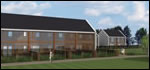
The development of Coppinger Court, a high density apartment complex on Popes Quay, Cork City, has been broadly received with a warm response, picking up awards in 2004 including the RIAI Best Sustainable Building award.

Ghost estates

Ghost Estates
Due to the ill-considered productivity of the house building industry towards the tail end of the economic boom, Ireland is now saddled with hundreds of thousands of vacant homes in various states of completion. Structural engineer Sadhbh Ní Hógáin, currently writing her thesis for a masters architectural degree in advanced environmental and energy studies at the Centre for Alternative Technology, looks at the options Ireland has to address the problem.

Safe as Houses

0305-energyefficienthousepricestitle.jpg
Conventional wisdom dictates that higher construction costs — for instance to reduce energy consumption and carbon emissions — would either squeeze developers’ profit margins or increase house prices. Tom Dunne, Head of DIT’s School of Real Estate and Construction Economics, reveals how misguided this view could be...

Solar enhanced ventilation

Solar enhanced ventilation
Designed and patented by Irish firm NuTech Renewables, solar enhanced ventilation aims to bring big energy and cost savings to the retrofit market by combining solar and ventilation technologies. NuTech’s Bill Quigley explains how it works.

A-rated Cork eco home

A rated Cork
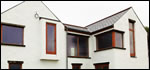
After a long struggle to build their home, Karen and Steve Ward finally got their wish — an energy efficient, timber frame house that boasts a palette of healthy and ecological materials and a fully renewable heating system.

Occupied Territory

John Hearne explains how truly low energy buildings can succeed or fail depending on how they engage with their occupants.

Breaking the mould - part I

Ill-considered attempts to upgrade a building’s thermal performance can not only fail to save energy, but can also create serious problems for occupant health and building structure alike. Leading green designer Joseph Little of Joseph Little Architects investigates the particular problems associated with dry-lining single-leaf concrete block walls

Critical mass

Critical Mass
Thermal mass can significantly influence a building’s space heating requirement – in some cases the effect is to increase it, and in others to reduce it. Leading energy consultant Ciaran King of Emerald Energy explains how this occurs, and by describing an assessment of the topic, provides some rules of thumb regarding when thermal mass may be beneficial, and when it may be detrimental.

Smart Move

Why the government must get smart metering right
The introduction of smart metering later this year presents a great opportunity to engage Irish people en masse into substantially reducing their energy consumption, simply by showing them how much electricity they’re consuming, and how much the cost varies at different times of the day. However, as Richard Douthwaite warns, there is a real risk that smart metering may come in a form that benefits the electricity companies and not the end-user.