Occupied Territory

John Hearne explains how truly low energy buildings can succeed or fail depending on how they engage with their occupants.
Welcome to the archive of Construct Ireland, the award-winning Irish green building magazine which spawned Passive House Plus.
The feature articles in these archives span from 2003 to 2011, including case studies on hundreds of Irish sustainable buildings and dozens of investigative pieces on everything from green design and building methods, to the economic arguments for low energy construction.
While these articles appeared in an Irish publication, the vast majority of the content is relevant to our new audience in the UK and further afield. That said, readers from some regions should take care when reading some of the design advice - lots of south facing glazing in New Zealand may not be the wisest choice, for instance.
Dip in, and enjoy!

John Hearne explains how truly low energy buildings can succeed or fail depending on how they engage with their occupants.
While the principles of low energy building apply equally for new build and upgrades, the reality is that htting passive levels becomes much trickier when retrofitting. The Passive House Institute have taken this on board and created a retrofit standard that is ambitious but achievable.
If achieving eco buildings is challenging for new build, it is doubly so for renovation projects.
Philip & Delphine Geoghegan of iCon Architecture & Uban Design describe a low impact renovation that balances these apparent tensions with great success.

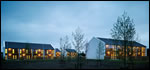
Chris Croly from BDP outlines the low energy and renewable energy strategies used in University College Cork’s new Environmental Research Institute, a test bed for the design and performance of sustainable buildings, which is ideally suited to housing the 200+ environmental projects carried out by its researchers.

Of huge importance to our national identity and one of the major features of the rural Irish countryside are the derelict small cottages, scattered across the land, that have long fallen into ruin. Often situated in Irelands most beautiful and remote areas, Terry Cunningham, Rural Enterprise Adviser of the Southern Tipperary office of Teagasc sought to revitalise and fully utilise these charming and unique dwellings from our past.

Much of the housing built around Dublin over the last forty years has been built of single-leaf nine-inch hollow block construction – which are both notoriously energy inefficient and extremely difficult to insulate effectively without causing damp problems. Lenny Antonelli visited a hollow block house which has been ecologically renovated to protect occupant health whilst shooting to the top of the energy rating scale.

Energy Minister Eamon Ryan recently announced a e9 million fund to be administered by SEI for sustainable housing including, crucially, micro-generation of renewable electricity. Jason Walsh talked to SEI and industry figures to examine the scheme’s future.

Just outside the quiet rural town of Templepatrick, County Antrim, located ten miles north of Belfast, is a timber frame house that sets new standards for comfort and, the owners hope, sustainability. Jason Walsh visited the house and found a traditional aesthetic that belies its ultra modern sustainability features

In recent years it’s become increasingly accepted that the age of cheap and abundant oil and gas supplies is coming to an end, and that future energy needs will have to be met from cleaner, more widely available fuel sources. According to Richard Douthwaite, the prospects of exponentially rising costs and failure to ramp up carbon capture and storage will mitigate against coal’s ability to take up the slack