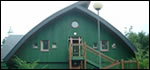

Rosslare passive scheme

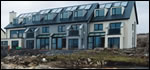
A new development at Grange Lough, Rosslare, reveals that passive houses can be made Irish – both in terms of what they’re built with, and how they look.
Welcome to the archive of Construct Ireland, the award-winning Irish green building magazine which spawned Passive House Plus.
The feature articles in these archives span from 2003 to 2011, including case studies on hundreds of Irish sustainable buildings and dozens of investigative pieces on everything from green design and building methods, to the economic arguments for low energy construction.
While these articles appeared in an Irish publication, the vast majority of the content is relevant to our new audience in the UK and further afield. That said, readers from some regions should take care when reading some of the design advice - lots of south facing glazing in New Zealand may not be the wisest choice, for instance.
Dip in, and enjoy!

A new development at Grange Lough, Rosslare, reveals that passive houses can be made Irish – both in terms of what they’re built with, and how they look.

Sustainable Urban Drainage System by Padraig Doyle, Brian Hennelly and Don McEntee.

Lenny Antonelli visits a new residential development in rural Carlow that boasts only the second and third certified passive houses in Ireland, and encouragingly, finds that meeting and exceeding the coveted passive standard wasn’t as difficult as expected.

High energy prices and growing public eco awareness is leading to a situation where people are giving existing homes energy upgrades on an unprecedented scale. Two recently renovated houses in Dublin are at the extremes of how even the most difficult existing dwellings can be made greener, as Jason Walsh reveals.

Much of the housing built around Dublin over the last forty years has been built of single-leaf nine-inch hollow block construction – which are both notoriously energy inefficient and extremely difficult to insulate effectively without causing damp problems. Lenny Antonelli visited a hollow block house which has been ecologically renovated to protect occupant health whilst shooting to the top of the energy rating scale.

“Electrical waste is one of the fastest growing waste streams in Ireland. It is a source of valuable materials which can readily be recycled and which we must divert from landfill”, Minister Martin Cullen, 19 February 2003.


There’s rather more to designing a sustainable building than specifying low-embodied energy materials and making sure it will require little energy and maintenance in use. Low water demand and the ability to get the nutrients discharged in the sewage back to the land are important too.

The need to reduce CO2 emissions and energy consumption from buildings has never been more immediate. There is a growing consensus that we must reduce our dependence on rapidly depleting, carbon intensive fossil fuels, which, amongst other things, will involve overhauling how buildings are designed, constructed and used.

Ireland's first passive house development emerged as the big winner at the inaugural Isover Energy Efficiency Awards in February. We look at the winner and other finalists